
Selected Article · 5 September 2026
The Transition Triangle (1): Capital Before the Transition—the Triangle That Can Turn a Revolution’s Victory into a Successful Transition
Download the English text ↓ · Read the Persian original ↗
The role of knowledge, planning and operational preparedness before a change of government, and how they connect with the people and the leadership of the transition period.
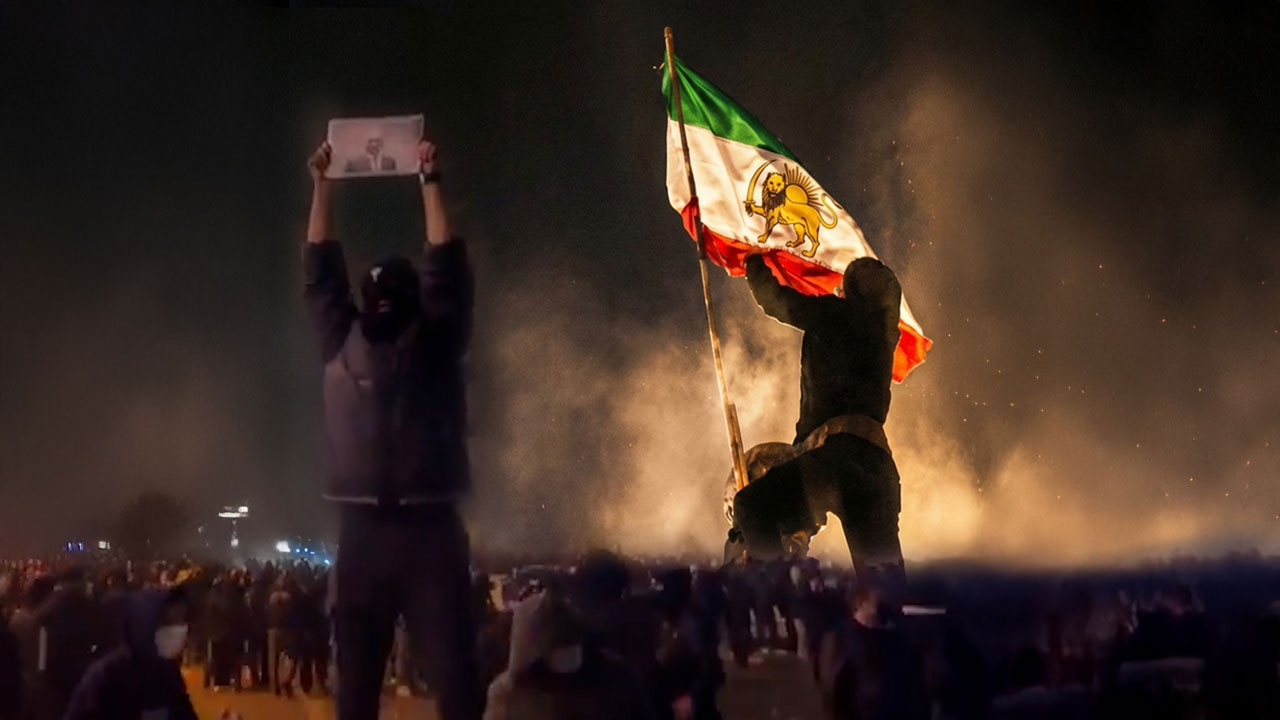
S. Rouzbeh – If the Islamic Republic were to fall tomorrow, would the people’s victory alone be enough to carry Iran successfully through what follows? And can the governance of a large and complex country be designed only after a change of government, or must a significant part of tomorrow’s state be prepared before that day arrives?
In most revolutions, our attention is on the moment the government falls, the streets, the leaders and the force that removes the previous regime. Yet we speak less often about something that may be just as important: what has been prepared for the day after victory.
I call this collection of assets ‘capital before the transition’. It means more than money or human resources; it encompasses the knowledge, plans, specialists, operational frameworks, temporary laws, mechanisms for governing the country and other preparations that must take shape before the moment of change arrives.
To understand the importance of this, the historical experience of Reza Shah in Iran and Mustafa Kemal Atatürk in Turkey offers a thought-provoking example.
Both came to power in countries in crisis, battered by the First World War. Iran faced a weak central government, foreign influence, insecurity, unrest and multiple local centres of power. In the south, Sheikh Khaz’al held a quasi-independent position with British support, while elsewhere the central government was also grappling with local and tribal forces as it sought to assert its authority. The defeated Ottoman Empire, too, was contending with occupation and the threat of partition.
Many of the reforms later associated with Reza Shah and Atatürk had already been proposed. In Iran, constitutionalists, intellectuals, jurists and administrators had debated the rule of law, a modern judiciary, public education, a national army and reform of the country’s structure. In the Ottoman Empire, too, decades before Atatürk, during the Tanzimat period, constitutionalists and intellectuals had discussed education, the army, law, science and the relationship between religion and government.
The main difference lay in one thing: under these two leaders, many of those ideas moved from discussion to implementation.
Reza Shah and Atatürk did not build their countries from a blank slate. In many cases, what they did was turn earlier plans and ideas into considered decisions and then into action.
In Iran, the judicial system was rebuilt, the National Bank was established, the University of Tehran was founded, roads and industry were developed, and the Trans-Iranian Railway was built. In fewer than sixteen years, the number of hospitals in the country rose from around 21 to more than 150, the road network expanded to about 24,000 kilometres, and a 1,394-kilometre transcontinental railway, with hundreds of bridges and tunnels, was built.
These were not things that appeared only in government decrees. People saw their effects in their everyday lives.
In Turkey, too, the new republic unified the education system, enacted a new civil code, replaced the Ottoman script with the Latin alphabet, expanded the railway network, reformed the university system, developed state-owned industries, and granted women political rights, including the right to vote and stand for election.
Naturally, neither of these experiences was flawless.
Both governments were authoritarian, and political freedom was restricted. Some reforms were also imposed from above by force. Even so, this authoritarianism must also be judged in the context of the period. Iran faced a weak central government, foreign influence and multiple local centres of power, and perhaps was not a nation in the modern sense. Turkey, too, had emerged from war and the threat of partition.
This explanation does not mean endorsing all the methods of that period. But if we set aside the realities of the time, our historical judgement will also be incomplete.
For all that, one fact remains: both managed, in a relatively short time, to bring about changes that people could see and experience.
Schools, hospitals, courts, roads, banks, universities, armies and government administrations are things that remain in a society’s memory, unlike speeches and slogans.
Perhaps this is part of the answer to an important question: why, almost a century later, does Atatürk still hold a special place in Turkey, and why has Reza Shah once again attracted attention and praise in Iranian society today, despite decades of Islamic Republic propaganda against the Pahlavis?
People may forget a leader’s speeches after a few generations. Or they may not find a book that is accessible, well-directed and impartial. But an institution that has endured, a university where generations have studied, or a law that still shapes people’s lives creates memory.
For example, in research I have carried out, I found that even today part of that period’s legal legacy remains. The 1937 Insurance Law and the 1933 law concerning the personal status of Iran’s non-Shia citizens, for instance, continue to be cited in Iran’s legal system nearly a century later.
This continuity can be regarded as a kind of “functional memory”.
But for Iran today, the lesson for the future matters more than judging the past.
Political change in Iran will come sooner or later. But the greatest danger is not only resistance and repression by the Islamic Republic. A power vacuum, disruption to public services, economic crisis, damage to the energy network, confusion among the military and police, and the state of prisons, borders, banks, the judiciary, government offices and dozens of other issues could turn a political victory into a major crisis.
That will not be the right time to start thinking about these issues, or to learn through trial and error.
The essential work must be done before that day arrives.
Various expert projects are being prepared today for the economy, energy, security, law, the administration of the country, emergency arrangements and so on; independent experts are also putting forward plans and proposals in different fields.
The value of this work should not be measured by the number of pages or the names of those involved. The question is simpler: can these plans actually be implemented at the moment of crisis?
This is where we arrive at the “Transition Triangle”.
The triangle has three sides: the people, as the force for change and the source of legitimacy; pre-transition capital, meaning the experts, plans and mechanisms ready to run the country; and the leadership of the transition period, which must turn the people’s wishes and expert knowledge into decisions, coordination and implementation.
None is complete without the other two.
Without a plan, the people may change the government but face a power vacuum. A plan without the people has no legitimacy, while the people and a plan without coordination may find themselves divided at the most critical moments of the transition.
A revolution’s victory does not end at the moment the government falls. Perhaps the real test begins at precisely that moment.
One of the less widely recognised lessons of the experiences of Reza Shah and Atatürk is just this: some of the speed of change during their eras resulted from ideas, administrators and plans that were already in place before the moment of implementation arrived.
Iran today can learn from that experience’s preparedness, speed and executive capacity without repeating its authoritarianism—with public participation, limits on power and the rule of law.
Perhaps the difference between a costly collapse and a successful transition lies precisely here: in how well the country has prepared for the day after, before the historic moment arrives.
Are we preparing only for the day the Islamic Republic ends, or are we just as prepared for the first morning of Iran after the Islamic Republic?
To be continued…..