Article · S. Rouzbeh · 23 November 2026
Mr Trump and Mr Rubio, You Face the Islamic Republic’s Power-Mad Leaders. Iranians Face Prison, Bullets and Execution
Addressing Donald Trump and Marco Rubio, S. Rouzbeh examines the repression of protesters, executions, communications shutdowns and the structure of unaccountable power. He asks who pays the price for the Islamic Republic’s policies and for the international response to them.
 Article · S. Rouzbeh · 23 November 2026
We Will Take Iran Back: How Is Despair Manufactured?
S. Rouzbeh examines how repression, coordinated messaging and unrealistic promises can turn a realistic assessment of obstacles into a conviction that change is impossible. The essay argues for evidence, solidarity and a hope grounded in collective action.
 Article · S. Rouzbeh · 23 November 2026
Tell Me Who Your Friend Is, and I’ll Tell You Who You Are — Part Nine: Belarus
Belarus, the ninth country in this series, has offered political support to the Islamic Republic despite limited trade with Iran. From 2022 to 2025, Minsk voted against human rights resolutions on Iran, while military cooperation expanded. A sanctions case involving a Belarus-based company raises questions about Iran’s arms procurement network. Why does a government facing sanctions and criticism of its own human rights record support Tehran? This article examines the political, security and economic interests behind the relationship and the role of Russia.
 Article · S. Rouzbeh · 20 November 2026
From Apranik to the Women Fighting in Iran Today: Legend, Courage and Truth
Centuries separate Apranik, the warrior woman of historical narratives, from the women fighting in Iran today, yet the question of courage and resistance remains. Is everything we read about the heroes of the past historical fact? And why do we sometimes seek legendary heroes when so many women in our own time have paid a price for freedom and human rights? Looking at women in ancient and contemporary Iran, this article examines the boundary between legend and reality and the need to record the lives of women who have struggled, and of victims of repression, so that they are not forgotten.
 Article · S. Rouzbeh · 19 November 2026
Tell Me Who Your Friend Is, and I’ll Tell You Who You Are — No. 8: Pakistan
Pakistan, the eighth country in the series “Tell Me Who Your Friend Is, and I’ll Tell You Who You Are”, exemplifies the complex relationship with the Islamic Republic: from barter trade and purchases of Iranian electricity to border cooperation and political mediation. Islamabad opposed human-rights resolutions concerning Iran in 2022, 2023 and 2026, although it engaged in a military confrontation with Tehran in 2024. This article examines which Pakistani decisions are driven by national interests and which, knowingly or unwittingly, help the Islamic Republic preserve its revenue and political standing.
 Article · S. Rouzbeh · 18 November 2026
The Ministry of Intelligence in a New Configuration: Dropping the Requirement for Ijtihad and the Puzzle of Two Security Hierarchies
Dropping the requirement for ijtihad could give the government greater freedom to choose a minister and help end the Ministry of Intelligence’s prolonged period under an acting head. But the simultaneous proposal to establish two organisations within the ministry, whose heads would be appointed by the Leader, raises questions about real authority and accountability. The change could strengthen internal security and continuity of oversight, but it could also foster rivalry and duplication, particularly alongside the IRGC Intelligence Organization. In a country where protests have been met with arrests, repression and killings, strengthening the security apparatus without independent oversight raises the alarm of further repression. The question is not only who gives the orders, but who will answer for the blood of the people.
 Article · S. Rouzbeh · 18 November 2026
The Farmer’s Sickle and the World’s Promises: A Fable’s Lesson for the Struggle, S. Rouzbeh
The lesson of the quail fable for politics today is not that people should turn their backs on the world. It is that they should seek help from others without entrusting their fate to others’ decisions. International solidarity can offer support, but the force that opens the way must arise from the society seeking freedom. The farmer’s sickle took on meaning when he decided not to wait. For people, too, hope for the world’s support is more enduring when joined with the capacity to persevere, learn and maintain social ties.
 Article · S. Rouzbeh · 17 November 2026
Tell Me Who Your Friend Is, and I’ll Tell You Who You Are — No. 7: India
For a society seeking accountability for repression and human rights violations, the distinction between historic friendship between peoples and practical support by governments matters. The people of Iran are not enemies of the people of India; this examination concerns government decisions which, at political turning points, can mean choosing between maintaining relations with a regime and supporting international accountability mechanisms. In January 2026, India made its choice by voting against a resolution at the Human Rights Council. Perhaps the key question is not whether India is a friend or enemy of the Islamic Republic, but under what circumstances India’s interests become a lifeline for the regime—and who pays the price for this pragmatism.
 Article · S. Rouzbeh · 16 November 2026
A Third Way: Beyond War and Appeasement
This article asks whether a coordinated, non-military approach could address repression in Iran and reduce security risks without starting another war. It argues that sanctions and other measures need clear goals, responsible agencies and ways to assess their real effects.
 Article · S. Rouzbeh · 13 November 2026
The Freedom Award in Frankfurt: The Islamic Republic’s Response with the Gallows?
The Frankfurt ceremony is over, the medal has been awarded and the speeches have ended. Yet for prisoners still under sentence of death, freedom remains bound up with survival. If the people of Iran are to be honoured for standing firm in the struggle for freedom, should efforts not also be made to save the lives of those still paying for that same freedom at the gallows?
 Article · S. Rouzbeh · 13 November 2026
Say Who Your Friend Is, and I’ll Tell You Who You Are, No. 6: Qatar
Qatar hosts a US military base and partners with major Western companies, while maintaining relations with the Islamic Republic and repeatedly mediating between Tehran and world powers. Is Doha simply seeking to protect its security and economic interests, or does maintaining ties with Iran’s current power structure bring it particular benefits?
 Article · S. Rouzbeh · 13 November 2026
From Missile City to Rat City: Everything Underground, Except People’s Problems!
After nearly half a century in power, the Islamic Republic seems to have found the golden formula for running the country: whatever cannot be put right above ground, dig up and move underground into tunnels. First came nuclear facilities nestled inside mountains, then missile cities emerging from the earth one after another, and now it is Tehran’s turn. Yet questions remain about the approval process, existing shelters, costs, safety and the risks posed by subsidence and water shortages. People need safe homes, clean water and breathable air above ground—not a city that merely moves its crises a few metres below it.
 Article · S. Rouzbeh · 12 November 2026
From Silent Anger to Conscious Resistance: How Can the Effects of Repression Be Neutralised?
In Iran, the first possibility is to preserve human connections. The families of those arrested or executed may need more than a photograph shared online: they may need to be heard, accompanied in their grief or helped with everyday tasks. Support, offered with a family’s consent and after assessing the risks, can reduce isolation. But sharing people’s names, addresses, images or private accounts without permission may increase security pressures, even when done out of solidarity. Real help is not always public.
 Article · S. Rouzbeh · 11 November 2026
When a Government Claims to Own the Truth: The Islamic Republic and Sect-like Mechanisms of Power
The Islamic Republic does not regard itself as answerable solely to the people’s vote: the Supreme Leader has sweeping powers, while the Guardian Council vets candidates before elections. The public vote exists, but the range of choice is restricted in advance. When a government claims to embody sacred truth and a historic mission, dissent may be treated as a threat to the system rather than a civic right. The UN Fact-Finding Mission concluded that some acts committed during the suppression of the 2022 protests amounted to crimes against humanity; Iran’s government rejected the findings and did not cooperate with the mission.
 Article · S. Rouzbeh · 11 November 2026
Halloween in the Land of a Thousand Festivals: Has the Islamic Republic Turned Young People Away from Their Cultural Heritage?
I have no objection to Halloween or to any other festival. In fact, I believe everyone has the right to celebrate freely whatever festival they like.
My article’s central point is something else. Iran, with all its national and local festivals—from Mehregan and Sadeh to Chaharshanbe Suri and the beautiful traditions of its diverse peoples—has had, and still has, a treasure trove of a culture of celebration. But by belittling and restricting many of these traditions, and favouring mourning over public joy, the Islamic Republic has harmed the vitality of our culture.
My concern is not that young people celebrate Halloween; it is that, in a land of a thousand festivals, young people should have to worry even about freely celebrating their own.
 Article · S. Rouzbeh · 11 November 2026
The War Will End, but the Earth Is Still Wounded!
War may one day end and cities may be rebuilt, but who can guarantee that polluted water will become drinkable again, poisoned soil will regain its fertility, and destroyed habitats will come back to life? The UN General Assembly designated 6 November as the International Day for Preventing the Exploitation of the Environment in War and Armed Conflict, to remember the damage that can persist for years after a war ends and affect the lives of future generations.
 Article · S. Rouzbeh · 11 November 2026
Tell Me Who Your Friend Is, and I’ll Tell You Who You Are, No. 5: Iraq
The US Treasury sanctioned networks in 2025 that, according to the department, blended Iranian oil with Iraqi oil or sold it as Iraqi oil. It alleged that one network generated hundreds of millions of dollars for those involved and the Islamic Republic. In a separate case, the US Treasury identified the Headquarters for Rebuilding the Holy Shrines as linked to the Quds Force in 2020 and accused it of using some religious donations to fund the force.
 Article · S. Rouzbeh · 9 November 2026
Enough of Sacred Ignorance: When Killing a Human Being Becomes Worship
What would you do if you discovered that a judgement you had issued was unjust, that a confession was false, or that someone had fallen victim to prejudice and a judicial error? Could you bring them back from the grave, or give a bereaved mother back the years of life she had lost? No office, uniform, religious title or superior’s order can wholly absolve a person of moral responsibility. Sacred ignorance is not merely a lack of knowledge; its danger becomes clear when people believe they know the whole truth and no longer need to ask questions.
 Article · S. Rouzbeh · 8 November 2026
Tell Me Who Your Friends Are, and I’ll Tell You Who You Are – Number Four: Russia
The fourth article in the 14-part series examines Russia’s role in sustaining the Islamic Republic, from strategic and economic agreements to military and intelligence cooperation, surveillance technology and diplomatic support. It asks whether Moscow merely profits from trade with Iran, or whether the survival of the Islamic Republic has itself become a strategic interest for Russia.
 Article · S. Rouzbeh · 7 November 2026
Mujahideen in Exile: Sacrificing Their Lives for Whom, at Whose Expense?
The issue is not merely the holding of a summit in Mashhad or the presence of several foreign guests. It is the outlook in which loyalty to a political and religious cause can serve as grounds for official recognition, while questions about what it has achieved for society remain unanswered.
Those who put food on the table for their families, workers whose wages do not cover the cost of living, pensioners worried about healthcare, and young people who see no bright future ahead have the right to know how the country’s resources are spent and what priorities guide their use.
 Article · S. Rouzbeh · 7 November 2026
Suppressing Anger: When Silence Does Not Mean Forgetting
Death may become a recurring item on the news calendar, but it is never an everyday story for a family that has lost someone they love. What should worry us most is not the normalisation of executions in people’s consciences, but the normalisation of conditions in which people witness suffering, feel moved to protest, yet do not feel safe expressing it. Silence is not always a sign of forgetting; sometimes it reflects the price placed on speaking out.
 Article · S. Rouzbeh · 6 November 2026
A Noose for Trump, a Message to the World!
A symbolic hanging of Donald Trump in Tehran was presented as mockery, but its imagery evoked Iran’s real executions and the families left behind. The author reflects on how a state-sponsored spectacle intended to insult a foreign president may instead expose the realities of its own rule.
 Article · S. Rouzbeh · 5 November 2026
Tell Me Who Your Friend Is, and I’ll Tell You Who You Are! (The UAE)
The UAE has long been one of Iran’s main routes for trade, goods and financial flows, despite the dispute over the three islands. This article examines the tension between political disagreement and economic cooperation, Dubai’s role in supplying Iranian markets, and the use of UAE-based companies in transactions linked to Iran’s shadow banking system.
 Article · S. Rouzbeh · 5 November 2026
Should a Doctor Treat or Not? Which Is a Crime?
The case of Zeynab Soleimani raises a central question: when an unconscious injured person is brought to A&E, should a doctor focus on saving their life or fear repercussions for whom they saved? If the law treats all patients equally, why is the professional safety of those who uphold it not guaranteed?
 Article · S. Rouzbeh · 5 November 2026
Driven from Their Homeland, Denied Safety in Exile Too!
Why is a government that would not tolerate its critics in Iran, and whose policies drove many of them to emigrate, now seeking to silence them thousands of miles away? Should Iranians who have left their homeland be deprived of safety and freedom of expression in their host countries too?
This contradiction is one consequence of 47 years of Islamic Republic rule: a government that fuelled emigration by restricting freedoms and excluding opponents, yet seemed to expect their protests to end once they crossed the borders.
 Article · S. Rouzbeh · 4 November 2026
They Silence the Journalist; Who Puts the Truth on Trial?
On the International Day to End Impunity for Crimes against Journalists – 2 November 2026
If a journalist is imprisoned for publishing the truth, who will defend them? If they die in custody and those responsible escape punishment, who will deliver justice? And if the institution that should hear the complaint is itself part of the accused structure, in which court should the truth be sought?
These questions are not limited to Iran. From the prisons of Iran and China to the battlefields of Gaza and Ukraine, from Mexico to the streets of Europe, journalists face threats, arrest, violence and death. But the issue is not only crimes against journalists; more important is the impunity of those responsible.
86 per cent of cases: a measure of justice’s failure
 Article · S. Rouzbeh · 4 November 2026
Pensioners: Echoing the Voices of Every Generation
Pensioners’ protests concern more than making ends meet: they voice the concerns of a generation whose security, dignity and future are bound up with the lives of its children and grandchildren.
 Article · S. Rouzbeh · 3 November 2026
Tell Me Who Your Friends Are, and I’ll Tell You Who You Are! (China)
China is the second of fourteen cases in this series examining what helps sustain the Islamic Republic. Beijing benefits from cheap Iranian oil, Chinese companies have helped supply surveillance and censorship technology, and China has repeatedly voted against UN human rights resolutions concerning Iran. How much does China gain from a government that violates its own people’s rights? How have these dealings helped it endure, and who may one day have to answer to the Iranian people?
 Article · S. Rouzbeh · 2 November 2026
Another Whiff of a Deal — But It's a Donkey They're Branding!
From the promise of a deal to shrinking household budgets: who benefits from economic relief, how will new funds be scrutinised, and why are freedom and livelihoods inseparable?
 Article · S. Rouzbeh · 1 November 2026
Tell Me Who Your Friend Is, and I Will Tell You Who You Are
Part One: Türkiye — Trading with Iran or Profiting from the Islamic Republic?
 Article · S. Rouzbeh · 31 October 2026
Putin and Iran’s Bloody Dossier: What Happened Behind Tehran–Moscow Security Cooperation?
Under Article 16 of the rules on the international responsibility of states, a state’s knowing assistance to another state in committing an internationally wrongful act may, if the legal conditions are met, entail international responsibility. If Russian institutions are ever shown to have knowingly supplied intelligence, technology or resources that helped the Islamic Republic unlawfully suppress its people, the responsibility of the Russian state could become a matter for legal action. Any potential individual criminal responsibility would require a separate investigation.
 Article · S. Rouzbeh · 30 October 2026
Grieving Mothers: Are We Still Standing Beside Them?
From feeling forgotten to our human and social responsibility towards bereaved families: reflections on listening, respect and sustained companionship.
 Article · S. Rouzbeh · 30 October 2026
Adolescent Day: From the Fahmideh Myth to the Use of Children in War
An examination of the Mohammad Hossein Fahmideh narrative, pupils' participation in war, and the government's responsibility to protect children's lives, safety and future.
 Article · S. Rouzbeh · 30 October 2026
An Interview with Mrs Donkey, Special Guest on National Media! — Part Two
Part Two: The economy is for donkeys — but where is the straw? S. Rouzbeh returns to Mrs Donkey's stable in a satire about private profit, public losses and an empty trough.
 Article · S. Rouzbeh · 29 October 2026
Who Are the ‘Summoned People’? Nightly Gatherings: A Show of Power or a New Mechanism for Holding the Streets?
An examination of government supporters' sustained nightly gatherings, their organisation, and what this presence reveals about the Islamic Republic's social base.
 Article · S. Rouzbeh · 28 October 2026
Water Finds Its Own Way
From schoolyards to universities: the changing forms of protest among the young and their encounter with the government's organised presence in educational settings.
 Article · S. Rouzbeh · 27 October 2026
The Ali Karimis of This World and the Trap of Division
Through the fable of the doves and the net, S. Rouzbeh examines the difference between evidence-based criticism and personal attacks, the responsibilities of public figures and the need for cooperation in the pursuit of freedom.
 Article · S. Rouzbeh · 27 October 2026
Can the Cat Become Pious?
The Islamic Republic under the pressure of war, sanctions and a leadership crisis: which of the government's claws are still at work? An examination of apparent concessions, social resistance and the continuing instruments of repression.
 Article · S. Rouzbeh · 26 October 2026
Longing for a Homeland We Have Never Seen
Why do the children of Iranians abroad long for a land where they were not born, and work for its freedom?
 Article · S. Rouzbeh · 23 October 2026
From Charles Bronson’s Telefon to the Islamic Republic’s Networks of Influence: Who Gives the Orders, and Who Carries Them Out?
From the 1977 film Telefon starring Charles Bronson to the outsourcing of political violence, this article examines chains of command, intermediaries and the need to distinguish evidence from suspicion.
 Article · S. Rouzbeh · 23 October 2026
An Interview with Mrs Donkey, Special Guest on ‘National Media’! — Part One
Part One: From the march to television. A fictional interview in the form of political satire by S. Rouzbeh, inspired by a donkey’s appearance on Channel Three’s ‘Good Morning’. The conversations and behind-the-scenes events are the author’s invention.
 Article · S. Rouzbeh · 19 October 2026
The Absent Leader's New Clothes
How long can a leader demand sacrifice while remaining out of public sight? Drawing on Andersen's tale, this essay examines direct accountability, unverifiable claims of authority, and the power of those who speak in an absent leader's name.
 Article · S. Rouzbeh · 19 October 2026
Mohseni Ejei: Executioner, Instigator of Murder, Responsible for a Chain of Executions — or a State Serial Killer?
This essay distinguishes political descriptions from criminal responsibility in examining Gholam-Hossein Mohseni Ejei's record. It considers historical allegations, public demands for rapid punishment, and the evidence needed to establish personal responsibility for unlawful killings.
 Article · S. Rouzbeh · 17 October 2026
From Error to Entrenchment: The Islamic Republic’s Inability to Reconsider
An examination of tactical learning, strategic assumptions and the difficulty of reconsidering policies that have become part of a political system’s identity.
 Article · S. Rouzbeh · 17 October 2026
It Wasn’t Me, It Was My Hand — Blame My Sleeve!
From attacks on commercial ships in the Strait of Hormuz to the killing of protesters in Iran, a reflection on evasions of responsibility, chains of command and the difference between knowing the truth and securing justice.
 Article · S. Rouzbeh · 17 October 2026
From Persepolis to Glasgow: The Cultural Legacy of the 2,500-Year Celebrations
A personal memory of a treasured book in a Glasgow home opens a reflection on Iran’s cultural presence abroad, the 1971 celebrations and the tourism opportunities the country could have developed.
 Article · S. Rouzbeh · 16 October 2026
From “Hard Object” to “Bullet”: When a Medical Term Becomes the Basis for a Narrative
In forensic reports on people killed during protests, terms such as “hard object” and “high-velocity projectile” caught my attention. What do these expressions establish—and what do they not? This article examines real examples and the gap between medical findings and official narratives, emphasising scientific precision, independent expertise and forensic doctors’ ethical responsibilities.
 Article · S. Rouzbeh · 13 October 2026
Mirsalim Is Right! — S. Rouzbeh
In 1358, many people voted in the hope of freedom, independence and a say in their own future. This essay asks how power over public wealth, war and peace became concentrated beyond direct public oversight, and what limits and accountability exist to protect citizens’ rights.
 Article · S. Rouzbeh · 13 October 2026
Under Which Sky Do We Live? My Freedom, Another’s Destiny (2)
But now another question also stands before us: can we, alongside this perseverance and solidarity, learn the art of cooperating with those who do not think as we do? We may live under different skies, have memories
 Article · S. Rouzbeh · 12 October 2026
A Massacre That Continues in the Survivors’ Dreams!
The massacre of 18 and 19 Dey 1404 cannot be understood only through the number of lives lost. A mother’s search for her child’s body among the dead, and the memories that continue to disturb survivors’ sleep, reveal another part of the tragedy: its human consequences do not end with the shootings or the burials.
 Article · S. Rouzbeh · 12 October 2026
Under Which Sky Do We Live? Distant Skies, Close Hearts (1)
A friend asked, “Under the shade of which sky are you?” A simple question that made me wonder: does a person belong only to the country where they live today? Why do some, despite safety and comfort, still worry about freedom for others?
 Article · S. Rouzbeh · 12 October 2026
Did the World Not Know — or Not Want to Know?
An examination of what governments knew about the Islamic Republic, why responses were delayed, and the responsibilities of Iran’s opposition.
 Article · S. Rouzbeh · 11 October 2026
January Will Not End Until Justice Is Done
Why, nine months after 8 and 9 January 2026, does time feel as though it has stopped? Drawing on psychological research and documented accounts, this article explores the persistence of images of those killed and the experience of collective mourning.
 Article · S. Rouzbeh · 10 October 2026
The Triangle of Blood in the Islamic Republic, S. Rouzbeh
“Blood-shedder, blood-washer, blood-drinker”: this article examines three facets of a mechanism of power in the Islamic Republic, from the use of lethal force to the erasure of responsibility and the taking of life through judicial execution.
 Article · S. Rouzbeh · 8 October 2026
The Unofficial ‘All or No One’ Doctrine — S. Rouzbeh
From “One for all, all for one” to “No oil for us, no oil for you”: this article examines a recurring regional political logic attributed to the Islamic Republic of Iran, its record in disrupting oil exports and shipping, and whether it has brought neighbouring states closer together.
 Article · S. Rouzbeh · 7 October 2026
What Language Does Execution Speak?
A shared language does not mean making every voice the same. We can expect these voices to preserve a person’s name and dignity, distinguish accusation from proven fact, make institutions’ responsibilities clear, and recognise the consequences of execution beyond the end of the news report.
 Article · S. Rouzbeh · 6 October 2026
How Many Kilometres Lie Between Life and Execution?
Marking 10 October, the World Day Against the Death Penalty, this article looks at the right to life from a different angle: the geographical distance between two sides of a border. Using the Iran–Turkey border as an example, it asks why a political line on a map can still determine how far a person’s life is protected.
 Article · S. Rouzbeh · 5 October 2026
What Will History Call These 47 Years? S. Rouzbeh
If we were to introduce these 47 years of Iran’s history to future generations under a single name, what would we call them? An era of repression and lost opportunities? Of migration and war? Of resistance and the pursuit of justice? Or something else?
 Article · S. Rouzbeh · 5 October 2026
You Closed Six Doors, Namaki, But Left One Open? The Najaf Exemption and a Question About an Open Door in Iran’s Aviation Sanctions
This article examines the US exemption allowing Iranian airlines to resume flights to Najaf after sweeping sanctions on Iran’s aviation industry and Iraq’s request to facilitate travel for pilgrims, patients, students and other passengers. It asks how the exemption is defined and monitored, particularly after a sanctioned Iranian airline operated the first resumed flight, and considers whether Najaf’s connections could offer an indirect route to international flights.
 Article · S. Rouzbeh · 2 October 2026
The Consequences of Bijan Mortazavi’s Kiss: Kissing Iranian Soil and What Remained Outside the Frame
An image that may begin as an expression of love for Iran can become, in the propaganda apparatus, evidence that conditions are normal, that opponents are being treated with tolerance, and that there is solidarity with the political system. And it is precisely at this point that we must not allow
 Article · S. Rouzbeh · 1 October 2026
The Islamic Republic at an Impasse: Should the War End or Continue?
War does not resolve Iran’s domestic crisis; it may only push it into the background for a time. Nor would an end to the war make that crisis disappear: it could bring it back to the centre of the stage. The government faces mounting economic pressure and internal grievances, whether the war continues or ends.
 Article · S. Rouzbeh · 1 October 2026
Underground: Shelter or a Way Out?
Perhaps the final question is not how many kilometres of tunnels the Islamic Republic has or how many missiles it has hidden in them. It is this: when a significant part of a state’s power moves underground, what remains above ground?
 Article · S. Rouzbeh · 30 September 2026
The intermediary changes; the negotiations continue.
Intermediaries and venues have repeatedly changed in Iran’s negotiations, but the process has never ended for good. This article examines why channels shift, how intermediaries’ roles differ, and how negotiations can serve as a means of buying time.
 Article · S. Rouzbeh · 27 September 2026
The War That Is Won First in AI — S. Rouzbeh
AI has become a new tool of psychological warfare and political propaganda, capable of portraying a war, victory or power that has not yet materialised in the real world. From Trump’s images of Kharg Island and the Strait of Hormuz to a video depicting Iran’s hypothetical first nuclear bomb, both sides use a shared visual language to present what they want—or want others to fear—might happen.
 Article · S. Rouzbeh · 26 September 2026
Shared Security or the Logic of ‘If It Doesn’t Boil for Me…’? — S. Rouzbeh
Masoud Pezeshkian’s remarks at the UN raise a question about what “shared security” means: a commitment to prevent crises from spreading, or a way to use others’ insecurity as leverage? The article explores this distinction through recent regional events, international law and the Persian proverb about a pot that does not boil for oneself.
 Article · S. Rouzbeh · 25 September 2026
Seven Ambiguities in the Handwriting Attributed to Mojtaba Khamenei
This article examines seven ambiguities surrounding the first letter attributed to Mojtaba Khamenei: whether its format is an official one used by the Leader or his office, whether an independent and earlier example of the same letterhead exists, and what form the version officially entered into administrative circulation would have taken if the text was a military order. None of the seven ambiguities alone disproves the document’s authenticity. Together, however, they raise an important question: if this handwriting is an authentic official order, where are its registration and notification records, reporting channels and supporting documents? Sometimes, what is absent from a document matters as much as what is written on it. Ultimately, this is another deception intended to prove that he is Commander-in-Chief and alive.
 Article · S. Rouzbeh · 25 September 2026
Why Is Reaching an Agreement with the Islamic Republic Difficult?
The Islamic Republic’s many voices of authority raise a fundamental question for any agreement: who has the real power to accept commitments, and who can guarantee their implementation? From the Islamabad understanding to the role of the absent Supreme Leader, the challenge is not only reaching an agreement but ensuring it can be carried out.
 Article · S. Rouzbeh · 23 September 2026
How Many Metres of Wall for 47 Years? — S. Rouzbeh
How large would a museum for the victims of 47 years of Islamic Republic rule need to be if it displayed a small framed image of every person killed? The question is not about establishing the number of victims, but about how Iran’s future society will preserve the memory of these years, examine how such events became possible, and learn from them.
Article · S. Rouzbeh · 21 September 2026The 2026 Census: From Counting People to Linking Their Records—Where Is It Headed?
Iran’s 2026 census will rely largely on administrative records rather than asking people directly. S. Rouzbeh examines what information will be linked, who can access it, and why transparency, safeguards and public trust matter.
 Article · S. Rouzbeh · 21 September 2026
From Drones to “Dāsh-Mashti”
The “Iran’s Self-Sacrificers” exercise in Tehran raises questions about the gap between modern warfare and a diverse street spectacle. The author examines how crowds, uniforms, drones and the language of resistance turn the street into a stage for displaying political power and symbolically militarising society.
 Article · S. Rouzbeh · 18 September 2026
Should Mojtaba Khamenei Be the Next Name on Amnesty International’s List of Those Responsible for Massacres?
An examination of claims about Mojtaba Khamenei’s past authority and why an independent investigation into his possible responsibility is necessary. The title does not report any new decision by Amnesty International.
Article · S. Rouzbeh · 17 September 2026Civil Guerrilla Resistance: Changing the Field of Struggle
An examination of non-violent civil resistance, grassroots initiatives and adapting methods of struggle to circumstances, with an emphasis on preserving the people’s strength.
 Article · S. Rouzbeh · 16 September 2026
From the Red Carpet to the Blacklist: What Does the Islamic Republic Do to Iranians Abroad?
From invitations to return to surveillance and threats, this article examines the Islamic Republic’s policy towards Iranians abroad and the “Elaaj” system.
Article · S. Rouzbeh · 14 September 2026Can We Reach Democracy with a Laughing Emoji?!
Criticise, give reasons, and do not insult; democracy must be learned and lived. A reflection on political disagreement, public mockery and the responsibilities that come with fame.
 Article · S. Rouzbeh · 12 September 2026
48 Unnamed Suspects in Iran’s Bloody Winter of Dey in the HRA Dossier
An examination of HRA’s dossier on the crackdown on the Dey protests, the 48 identified suspects, and efforts to pursue the responsibility of perpetrators and commanders through Germany’s Federal Public Prosecutor General.
 Article · S. Rouzbeh · 12 September 2026
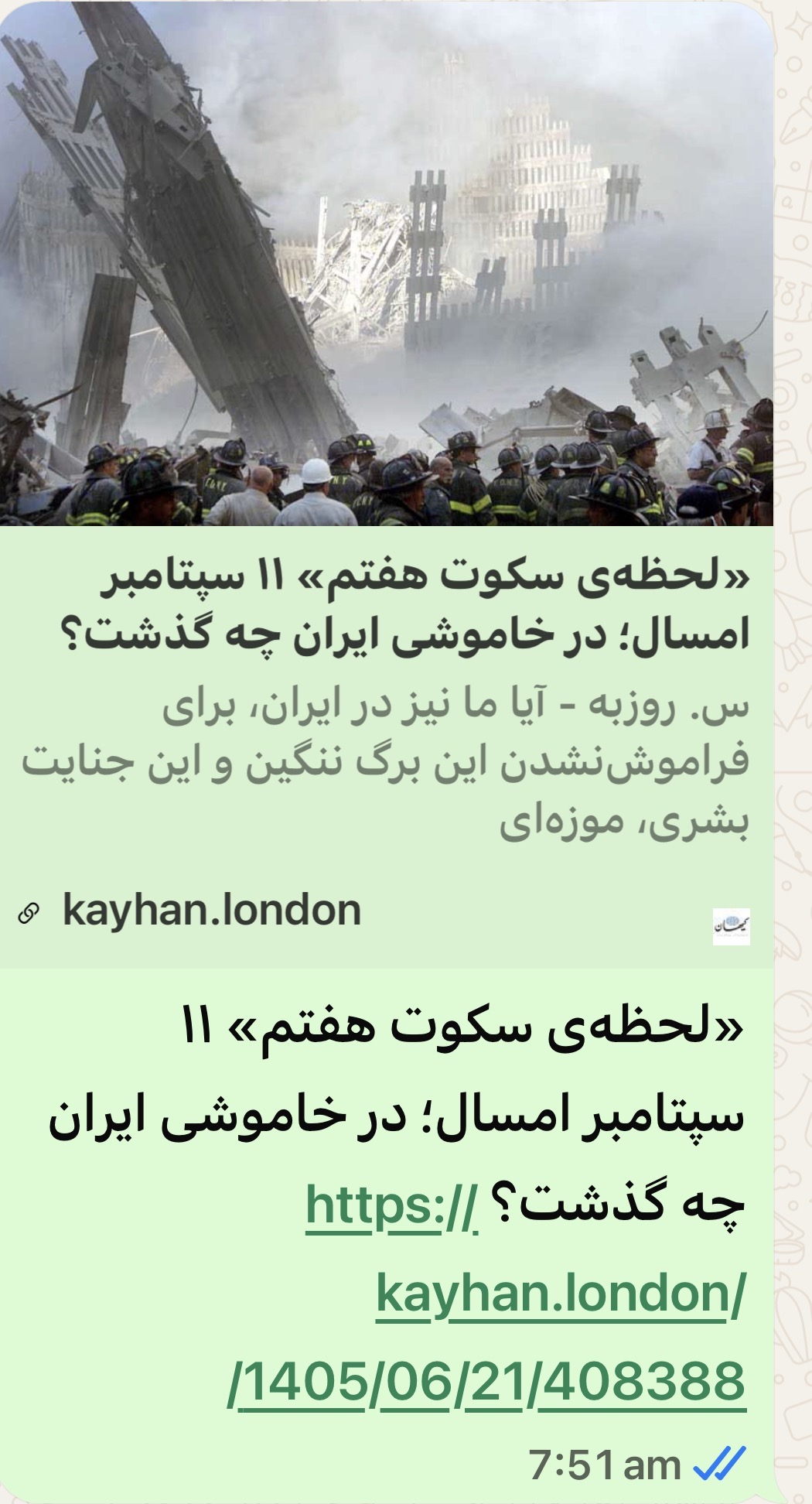
The Seventh Moment of Silence on 11 September This Year: What Happened in Iran’s Silence?
As New York adds a seventh moment of silence to remember those who died in the years after 9/11 from related illnesses, S. Rouzbeh asks how many victims and survivors of repression in Iran remain unknown—and how enforced silence has concealed their names and suffering.
 Article · S. Rouzbeh · 12 September 2026
Legal Questions in Ali Zarei's Case: From Political Activity to a Death Sentence — What Is the Missing Link?
This article does not set out to pronounce Ali Zarei innocent or guilty. Its question is simpler, yet more fundamental: is what we know of the case so far sufficient to justify the most severe punishment available in law?
 Article · S. Rouzbeh · 10 September 2026
Flights Continue—but at What Cost?
How can fresh US sanctions raise the cost of air travel and transport without formally closing the skies, and put pressure on passengers and dependent businesses?
 Article · S. Rouzbeh · 8 September 2026
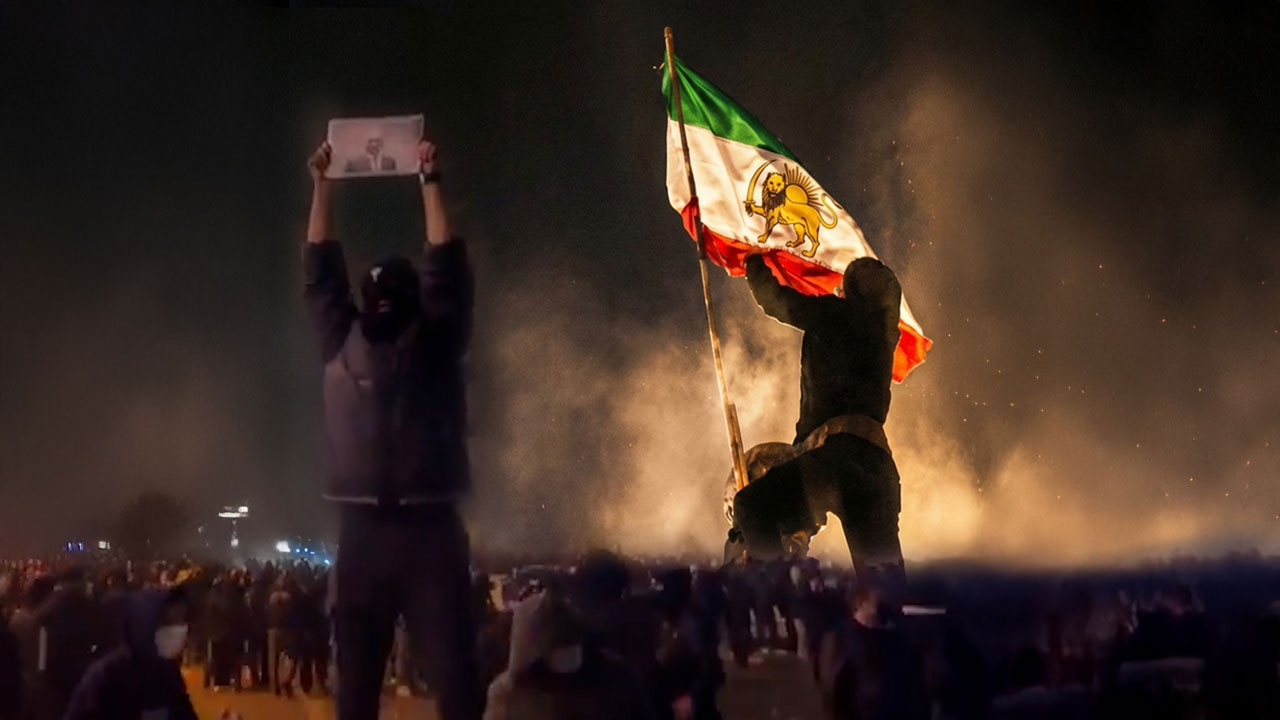
The Transition Triangle (3): The People, the Base of the Transition Triangle; the Force That Begins the Revolution, Legitimises the Transition and Chooses the Future
The people are the force for change, the source of legitimacy, partners in the transition and the final arbiters of Iran’s future; the people’s side completes the Transition Triangle.
 Article · S. Rouzbeh · 7 September 2026
The Second Tanker War: Is the Islamic Republic Repeating the Mistake It Made Forty Years Ago?
From the fast boats of the 1980s to today’s ballistic missiles, the weapons have changed—but has Tehran’s strategic calculus changed too? A comparison of the tanker war and the present-day confrontation in the Persian Gulf.
Article · S. Rouzbeh · 7 September 2026The Transition Triangle (2): The Leader of the Transition; Why Does the Opposition Need ‘Operational Convergence’?
The role of transition leadership in connecting the people’s strength with expertise and ready-made plans for decision-making, coordination and implementation.
 Article · S. Rouzbeh · 7 September 2026
How Does the Judicial Corridor of Repression Work?
Why do the names of certain court branches and judges recur in political and security cases, when hundreds of other judges serve in the same judiciary?
Article · S. Rouzbeh · 7 September 2026How Does the Judicial Corridor of Repression Work?
An examination of specialist courts, case assignment, sentencing figures and overturned rulings suggests that political and security cases are channelled through a limited set of judges and court branches—a structure that may be called a “judicial corridor”.
Article · S. Rouzbeh · 5 September 2026The Transition Triangle (1): Capital Before the Transition—the Triangle That Can Turn a Revolution’s Victory into a Successful Transition
The role of knowledge, planning and operational preparedness before a change of government, and how they connect with the people and the leadership of the transition period.
 Article · S. Rouzbeh · 3 September 2026
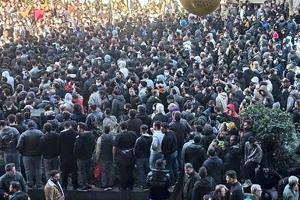
When Will the People of Iran Rise Up? An Answer to Trump’s Question
Why should the people of Iran weigh the cost to their lives and the likely outcome before returning to the streets? They have risen repeatedly; the question is not whether they want change, but what will be different this time—and why they alone should be expected to take the risks without calculating the consequences.
 Article · S. Rouzbeh · 3 September 2026
A Government Under Siege — or Its People?
Pressure on oil, money and sanctions-evasion networks: who ultimately pays the bill?
 Article · S. Rouzbeh · 31 August 2026
They Took More Than a Million Years of Life and Love from Iran!
Taking an approximate figure of 40,000 deaths as a working assumption, this article considers the human future lost—not only the lives cut short, but also the families, relationships, experience and hopes that are wounded or disappear with them.
 Article · S. Rouzbeh · 29 August 2026
From Aladdin to the Grand Bazaar: Why Did Taeb Turn to the Merchants?
S. Rouzbeh examines why Hossein Taeb has called on merchants and trade associations to monitor the market, and whether the government is seeking to turn their networks into an early-warning system amid fears that economic protests could become political.
 Article · S. Rouzbeh · 28 August 2026
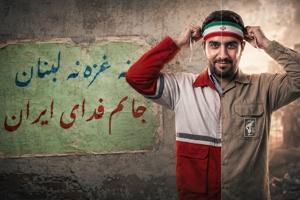
The Slogan the Government First Condemned, Then Reproduced
How the Islamic Republic shifted from rejecting national symbols to invoking Iran, the homeland and Iranian historical memory in its official propaganda during times of crisis.
 Article · S. Rouzbeh · 26 August 2026
The Shah-era Gentlemen in Ties and the Elderly Women of Mellat Park: A Struggle Rarely Seen
S. Rouzbeh recalls elderly men and women gathering in Tehran’s Mellat Park in the late 1990s to share their memories and views of Iran’s past with younger generations—and a struggle the government could not tolerate.
 Article · S. Rouzbeh · 25 August 2026
Reforming the Judiciary or Reorganising It for Days of Crisis?
This article examines the security and human-rights records of selected officials recently appointed or promoted in Iran’s judiciary, and asks whether the changes reflect judicial reform or a security-oriented approach.
 Article · S. Rouzbeh · 22 August 2026
Grief After Grief (4)
How can grief, if channelled well, become a force for change and victory? Emotion can set a movement in motion, but it cannot reach its destination alone. The path from mourning to lasting political action runs through recognising injustice, demanding accountability, organising and acting with purpose.
Article · S. Rouzbeh · 21 August 2026Grief After Grief (3)
Why does one grief fade after a few months, while another, forty years later, still haunts a government? S. Rouzbeh reflects on loss, collective action and the transformation of grief into conscious anger.
Article · S. Rouzbeh · 20 August 2026Grief After Grief (2)
When a family’s grief becomes part of a community’s memory
Article · S. Rouzbeh · 19 August 2026Grief After Grief (1)
How can one family’s bereavement be turned into a nation’s memory and conscious anger? The story of a father who kept walking through his neighbourhood with photographs of his executed children, and the questions that experience raises about grief, memory and repression.
Article · S. Rouzbeh · 17 August 2026From the Slogan ‘May You Die Before You See the Leadership’ to a Leader Who Cannot Be Seen
When the leader is absent, who governs in his name? S. Rouzbeh examines the unanswered questions surrounding Mojtaba Khamenei’s leadership, his absence from public view, the constitutional requirements for the office and the possibility that the Revolutionary Guards are governing in his name.
Article · S. Rouzbeh · 13 August 2026Seventeen Eyes, One Blind Spot
Why has the Islamic Republic’s security apparatus failed to protect its commanders, yet expanded its surveillance of the public? S. Rouzbeh examines the gap between national security and regime security, the growth of intelligence networks, and the government’s response to espionage and dissent.
Article · S. Rouzbeh · 12 August 2026The Invisible Leader’s Offensive Doctrine
The claim that Iran has shifted to an offensive doctrine raises questions about its military capabilities, the security failures that exposed its leadership, and the unseen new supreme leader. The rhetoric may signal less a fundamental change in military power than an effort to rebuild damaged deterrence and frame retaliation as policy.
Article · S. Rouzbeh · 9 August 2026A Face Every Day, a New Controversy Every Day: Who Is Stealing Our Time?
From Parviz Parastui and Adel Ferdowsipour to Narges Farrokhi, Bijan Mortazavi, NIAC and a Reuters report: why does each new wave of controversy divert some of society’s attention from its main goal?
Article · S. Rouzbeh · 1 August 2026Execution Before Execution
How has the Islamic Republic turned the anticipation of death into an instrument of torture, intimidation and power?
Article · S. Rouzbeh · 31 July 2026What Was Khamenei Laughing at That the Regime Fears Today?
From mocking opponents at a Munich conference to Khamenei’s death, the weakening of the regime’s leadership and Reza Pahlavi’s emergence as a security concern: how did the regime’s calculations change in less than seven months?
Article · S. Rouzbeh · 25 July 2026Those Who Are Not with the People: Where Do They Stand in This Struggle?
Unity is a condition of victory; dissent is a right, but having no plan is not. S. Rouzbeh examines the principles for cooperation during a transition, the different groups opposing Prince Reza Pahlavi, and the need to offer practical proposals rather than simply say “no”.
Article · S. Rouzbeh · 21 July 2026From Kuwait and the Falklands to the Balkans and Ukraine: Miscalculations and the Risk of War Spreading
Could a few drone or missile strikes draw other countries into the current war? From Pakistan’s commitments to Saudi Arabia to the strategic importance of the Strait of Hormuz, history shows how misjudging others’ reactions can allow conflicts to spread beyond the control of those who began them.
Article · S. Rouzbeh · 17 July 2026Why Does Every Offer of Peace Give Way to Another Crisis?
An examination of the gap between diplomatic language and renewed conflict, and of how external tension can postpone domestic accountability.
Article · S. Rouzbeh · 15 July 2026Where Did—and Does—the Order to Kill Come From?
Street killings are the final scene in a chain of command and criminal responsibility. Justice must examine everyone involved, from those who used force to senior commanders and officials who ordered, enabled or concealed the repression.
Article · S. Rouzbeh · 10 July 2026Anatomy of the Islamic Republic’s Official Language
S. Rouzbeh examines how the Islamic Republic turns threats of revenge into an official language of power, using them to deflect accountability, intimidate society and cultivate a culture of violence—from children’s performances to military commanders’ speeches.
Article · S. Rouzbeh · 7 July 2026An Indictment That Exposed the Regime’s Fear: Why Is the Islamic Republic Building a Security Case Against Crown Prince Reza Pahlavi?
S. Rouzbeh examines the Islamic Republic’s indictment of Crown Prince Reza Pahlavi, questioning its timing, legal basis and political purpose, and warning that a case with little force in democratic legal systems may still serve propaganda and psychological warfare—and carry extrajudicial risks.
 Article · S. Rouzbeh · 7 July 2026
Can Mourning Manufacture Legitimacy?
From the anniversary of Khomeini's death to Khamenei's coffin.
Article · S. Rouzbeh · 3 July 2026When the World Is Watching, What Image Do We Show?
S. Rouzbeh reflects on how Iranians abroad can make their presence and message more visible to the world, proposing shared symbols, clear multilingual slogans and coordinated moments of remembrance and protest.
Article · S. Rouzbeh · 2 July 2026A DShK in the Street: When the Government Sees the People as the Enemy
The sight of a heavy machine gun in Iranian streets signals the transfer of battlefield logic into the city. The author argues that this reflects a government’s fear, not strength, and calls for solidarity, documentation and organised resistance to repression.
Article · S. Rouzbeh · 30 June 2026A Coffin Instead of a Will: The Islamic Republic in Search of Legitimacy after Khamenei
The absence of a will, confusion among the Assembly of Experts, the role of the IRGC and the unanswered question of Mojtaba Khamenei.
Article · S. Rouzbeh · 26 June 2026When Everyone Agreed, What Is This Pretence of a Dispute For?
S. Rouzbeh questions the public opposition to an agreement after President Masoud Pezeshkian said almost all members of the Supreme National Security Council had agreed to it. The article examines the council as a concentrated expression of power and asks who is accountable for its decisions.
Article · S. Rouzbeh · 25 June 2026Iran Is Not Hungry; Iran Has Been Taken Hostage
Iran’s people are not asking for food aid in place of freedom. They want their national wealth returned to them, an end to repression and the right to determine their own future. Any agreement that leaves the Islamic Republic in power must also answer for the bloodshed of past protests.
Article · S. Rouzbeh · 23 June 2026We cried out about the killings; but where is the case file?
The author asks why images, testimonies and evidence of killings and repression have not yet been brought together in an accessible legal case file, and reviews past efforts to document abuses.
Article · S. Rouzbeh · 17 June 2026When a Goal Celebration at the FIFA World Cup Casts the Shadow of a Gun
S. Rouzbeh examines a football goal celebration that resembled a hand-held gun gesture, asking what it means when directed at Iranian spectators and considering its visual, political and historical context.
Article · S. Rouzbeh · 14 June 2026Why Did the Saigon Photograph Shake the World, but Images from Iran Did Not?
Comparing Eddie Adams’s iconic photograph from Saigon with images of those killed during protests in Iran, S. Rouzbeh asks whether the difference lay not in the truth itself, but in whether it was allowed to be seen.
Article · S. Rouzbeh · 14 June 2026An Agreement Without the Iranian People Is Only Buying Time for the Islamic Republic
S. Rouzbeh asks whether peace can be made with a government whose greatest victim is its own people. Drawing on the lesson of Munich and the Islamic Republic’s record, he argues that an agreement made without the Iranian people would offer the regime time to rebuild and continue its repression.
Article · S. Rouzbeh · 12 June 2026I See Your Suffering, I Hear Your Voice: A Word About Hope for Iran
In a time of war, insecurity and loss, what does hope mean? S. Rouzbeh reflects on hope as a force that acknowledges suffering while helping people and nations shape a better future.
Article · S. Rouzbeh · 9 June 2026A Great Change: From “Iran Is Our Inherited Birthright” to “We Will Take Iran Back”
Why has national identity returned to the streets? S. Rouzbeh explores the growing prominence of “Iran” in protests and social media, and what slogans about reclaiming Iran and the Pahlavi era reveal about belonging, identity and the country’s future.
Article · S. Rouzbeh · 8 June 2026The World Saw, the World Heard, the World Fell Silent: Why Does Iran Need a National Archive of Truth?
S. Rouzbeh reflects on the gap between witnessing human suffering and demanding accountability, drawing on the example of apartheid-era South Africa to argue that preserving victims’ names, testimonies and documents is essential to justice—and asking who should create a national archive of victims in Iran.
Article · S. Rouzbeh · 5 June 2026A Generation’s Regret: A Conversation on a Rainy Evening
S. Rouzbeh meets a frail older man at a rally on a cold, rainy evening. Over coffee, the man reflects on a lifetime spent pursuing what he called justice, from his teenage years in politics and revolution to his involvement with left-wing groups.
Article · S. Rouzbeh · 2 June 2026The Unknown Man and the Government That Feared His Image!
S. Rouzbeh asks whether filming a public event makes someone a witness or a spy, and what the ten-year prison sentence handed to Masoud Piyahoo reveals about power, truth, collective memory and the freedom to circulate information. The article considers the image of a lone man facing security forces and contrasts the case with Darnella Frazier’s recording of George Floyd’s death.
Article · S. Rouzbeh · 27 May 2026The ‘Ekbatan Kids’ Case: Criminal Justice or a Display of Security Power?
The ‘Ekbatan Kids’ case has raised questions about proof of individual criminal responsibility, the fairness of the judicial process and the government’s insistence on pursuing severe sentences. This article examines the legal uncertainties surrounding the case and asks whether it is being used to make an example of a generation of protesters.
Article · S. Rouzbeh · 26 May 2026A Secret Agreement for Survival
Why does the Islamic Republic fear transparency? If an agreement is to be concluded, why are its details not made clear and public? Is keeping agreements secret part of the Islamic Republic’s strategy for survival?
Article · S. Rouzbeh · 23 May 2026Sometimes the Saddle on the Back, Sometimes the Back on the Saddle: The Islamic Republic Turns to the Kolbars
The Islamic Republic, after years of punishing kolbars, is now turning to kolbari routes to address shortages of petrochemical and polymer raw materials. The article examines what this reversal reveals about the crisis in official trade, the burden placed on impoverished border communities, and the risks of new rent-seeking.
Article · S. Rouzbeh · 18 May 2026How Long Can the Islamic Republic Play Nuclear Games with the World?
The nuclear dispute is about more than enriched uranium: it reflects decades of mistrust and has exacted a heavy toll on ordinary Iranians. As Tehran uses the nuclear issue and regional threats to buy time, the article asks how long the public can bear the costs of sanctions, insecurity and political survival.
Article · S. Rouzbeh · 18 May 2026The Crown Prince warns buyers of confiscated property: what are the hidden legal consequences of these transactions?
The article examines the legal and financial risks of buying property seized by the Islamic Republic, including challenges to confiscation orders and the difficulty of claiming good faith after public warnings.
Article · S. Rouzbeh · 14 May 2026The 2026 FIFA World Cup: The Islamic Republic Enters a Field It No Longer Controls
The Islamic Republic has decided to take part in the 2026 World Cup, but the tournament may expose the widening divide between the government and many Iranians, particularly those living abroad. As football becomes a contest over symbols and national identity, the question is whether the government can control a stage on which it does not have the upper hand.
Article · S. Rouzbeh · 9 May 2026What Is the Battle Over the Ownership of Meaning?
The Islamic Republic wages a political and psychological war over language, appropriating words such as “Iran”, “the people”, “security” and “resistance” to control their meaning and turn them against society. Reclaiming these words is part of building an independent political language.
Article · S. Rouzbeh · 8 May 2026Did Trump’s Game with the Islamic Republic Halt the Lion and Sun Revolution, or Make It Burn More Fiercely?
S. Rouzbeh asks whether the threat of war and political manoeuvring have held back Iran’s Lion and Sun Revolution—or deepened the public’s determination to overthrow the Islamic Republic—and argues that lasting change depends on organised hope and the will of the Iranian people.
Article · S. Rouzbeh · 6 May 2026Unable to Reach the Lion, He Turns His Fury on the Sheep
An analysis of threats over the Strait of Hormuz as a means of engineering fear, and of how pressure shifts towards weaker targets when direct confrontation is constrained.
Article · S. Rouzbeh · 2 May 2026Taking Iran Back from the Regime and the Deal-Makers
S. Rouzbeh argues that taking Iran back requires more than the fall of the Islamic Republic: it calls for targeted external pressure, public readiness, fractures in the forces of repression, a clear political alternative, resistance to foreign deals over Iran’s future, and effective communication and messaging.
Article · S. Rouzbeh · 27 April 2026Neither Spectators nor Victims: Iran at a Moment of Decision
Iran faces a dangerous crossroads. The way forward is neither passivity nor reckless action, but preparation, patience, solidarity and intelligent civic engagement that can turn protest into a national, effective movement while minimising the human cost.
Article · S. Rouzbeh · 27 April 2026An Agreement with the Islamic Republic: Stability or Artificial Respiration for a Worn-out Regime?
Can a lasting agreement be made with a government that has lost its popular support through killings, imprisonment, exile and repression? An agreement that ignores those killed in protests, political prisoners, grieving families and the will of the Iranian people is neither peace nor stability; it merely buys time for a regime whose legitimacy at home has collapsed.
Article · S. Rouzbeh · 23 April 2026The Leader Is Dead, the Successor Shrouded in Uncertainty: A Riddle the Islamic Republic Cannot Solve
S. Rouzbeh asks whether the Islamic Republic, after nearly half a century of rule through authority, threats and sanctity, can no longer even close the chapter on its leader’s death. Delayed burial, uncertainty over the burial site and the successor’s absence from public view raise questions about succession, decision-making and a regime caught in its own web of lies, hypocrisy and propaganda.
Article · S. Rouzbeh · 23 April 2026With a Homeland or Without One
A response to accusations of disloyalty against Iranians abroad, contrasting attachment to a country with the record of those who govern it.
 Article · S. Rouzbeh · 21 April 2026
Iran: A Land of Memory and Accountability
On foreign proxy forces entering Iran and serving its machinery of repression.
Article · S. Rouzbeh · 18 April 2026The Trojan Horse Is Not Wooden; It Is Economic. It Is Not a Gift Marking the End of War, but a Gift Marking the End of Illusion
S. Rouzbeh examines how economic pressure and a new kind of soft siege may expose the vulnerabilities of the Islamic Republic, and asks whether the people of Iran can, under Prince Reza Pahlavi’s leadership, complete their unfinished work when the regime is weakened.
Article · S. Rouzbeh · 16 April 2026A Warning for Iran from Lebanon: The Danger Is More Than a Few Yellow Flags
S. Rouzbeh warns that the gradual normalisation of foreign-backed armed networks and their symbols could erode Iran’s national sovereignty, drawing lessons from Lebanon’s experience.
Article · S. Rouzbeh · 13 April 2026The Strait of Hormuz Is Not the Suez Canal: The Legal Error in Normalising Iran’s Claim
S. Rouzbeh examines why the Strait of Hormuz cannot be equated with artificial canals such as Suez and Panama, and why treating tolls for passage through it as normal risks legitimising a weak and costly legal claim.
Article · S. Rouzbeh · 12 April 2026Why Does the Government Fear Celebrities but Pay Less Attention to Scientists?
An examination of celebrity influence, weak institutions and the right to disagree, arguing for a democratic culture that values independent scholarship and collective work without idolising or destroying public figures.
Article · S. Rouzbeh · 11 April 2026Iran Is No Longer Beautiful, but It Will Be Beautiful Again Soon
S. Rouzbeh reflects on a country scarred by war, fear and the government’s treatment of its people, while holding on to the belief that better days will come for Iran.
Article · S. Rouzbeh · 10 April 2026Trump’s threats had an effect: a pause in the war, Iran’s escape from collapse
S. Rouzbeh argues that the two-week pause is neither peace nor a final ceasefire, but a temporary retreat from the risk of a more destructive phase of war. He rejects both claims of total victory and total surrender, describing the pause instead as a tactical reprieve—and a temporary escape from faster collapse—secured at the cost of a people long burdened by the government’s policies.
Article · S. Rouzbeh · 9 April 2026The War That Brought Arabs and Israel Closer: The Birth of the Middle East’s Informal NATO
The latest war is driving the Middle East beyond symbolic diplomacy towards practical security cooperation. Though no formal NATO-style pact exists, a layered network linking Israel, the United States and some Arab states is taking shape around intelligence-sharing, air defence and the protection of energy and shipping routes—bringing strategic alignment as well as risks of deeper regional polarisation.
Article · S. Rouzbeh · 8 April 2026What Was Destroyed in Iran That Money Cannot Bring Back?
A country’s infrastructure is not only its roads, bridges and refineries. When people are killed, injured, imprisoned, forced to emigrate or excluded from the work of building their country, what is lost is not merely population, but part of its future. The destruction of human capital represents decades of a nation’s accumulated time—something money alone cannot restore.
Article · S. Rouzbeh · 7 April 2026A Rational Route to Stability: An Agreement That Requires Iran’s Regime to Face a Free Vote
A proposal to focus international pressure on a credible agreement for a free vote, with safeguards for implementation and a transfer of power based on the result.
Article · S. Rouzbeh · 5 April 2026Stop at Every Checkpoint: Five Years of Bloodshed and Fear at Iran’s Checkpoints
Documented reports from 1400 to 1404 show that at least 19 civilians have been killed in incidents involving checkpoints in Iran. This account examines how checkpoints have become sources of fear, the consequences of inexperienced or unaccountable forces, and the deeper crisis of governance behind the shootings.
Article · S. Rouzbeh · 1 April 2026After Khamenei: The Crisis Is Not Just Succession, but the Transfer of Responsibility
S. Rouzbeh examines the uncertainty surrounding Iran’s leadership after Ali Khamenei, arguing that while power may have been transferred hastily, responsibility for war, repression and political failure has not. Drawing on the film The Death of Stalin, the article describes a system in which authority is concentrated among a small circle while accountability remains obscured.
Article · S. Rouzbeh · 30 March 2026Who Benefits from the Islamic Republic’s Survival? From Moscow and Beijing to Hesitant European Capitals and Neighbours
S. Rouzbeh examines why Europe and NATO act cautiously towards the Islamic Republic, which countries benefit from its survival, and why the world prioritises containing the conflict over decisive action. The article contrasts human-rights rhetoric with the calculations of energy security, trade and regional stability.
Article · S. Rouzbeh · 27 March 2026Negotiation or Fabrication? The Islamic Republic’s Six Conditions and Its Fear of the Media and the Truth
S. Rouzbeh examines the reported six conditions Iran has set for ending the war, arguing that the list is less a genuine peace proposal than a reflection of the Islamic Republic’s priorities: preserving its regional proxy network and suppressing independent media. The demand to hand over journalists, the article argues, exposes the regime’s fear of truth and its continuing efforts to treat journalism as a security threat.
Article · S. Rouzbeh · 26 March 2026When Hitler Is Used as an Instrument of Patriotism
An analysis of an attributed quotation and a political poster, examining how fear, insult and emotional shock can displace public reasoning.
Article · S. Rouzbeh · 24 March 2026The Strait of Hormuz, Infrastructure and the Logic of Scorched Earth
The Strait of Hormuz crisis risks escalating from a confrontation over a maritime passage into attacks on vital infrastructure. The article considers the threats from Washington and Tehran, the risks of miscalculation, and Reza Pahlavi’s warning against targeting Iran’s civilian infrastructure.
Article · S. Rouzbeh · 22 March 2026A Coup by the People or a Leadership Vacuum? When All That Remains at the Top Is a Statement
A critique of the language used in the message attributed to Mojtaba Khamenei, asking whether unarmed protesters can be called coup plotters and what the absence of a visible leader says about the Islamic Republic’s authority and legitimacy.
Article · S. Rouzbeh · 21 March 2026Justice Before Power: Why the Order to Establish a Transitional Justice Committee Is One of the Most Important Tests of the Transition from the Islamic Republic
S. Rouzbeh examines the announcement of a committee to design a transitional justice framework for Iran, its potential benefits, and the legal, political and practical challenges it will face.
Article · S. Rouzbeh · 19 March 2026When Reality Recedes, the Image Moves Forward
In modern warfare, battles are fought both on the ground and in the realm of perception. S. Rouzbeh examines how fabricated images and exaggerated claims can reveal the widening gap between military reality and official narratives, particularly in the case of the Islamic Republic.
Article · S. Rouzbeh · 16 March 2026The Cardboard Leader, Hidden Command and Tremors in the Repressive Apparatus
S. Rouzbeh argues that hidden leadership, underground command posts, damaged communications and the survival instincts of security forces point to structural entropy and growing social and economic strain.
Article · S. Rouzbeh · 14 March 2026From the Qizilbash to the IRGC and Basij
A comparison of the Qizilbash and the Islamic Republic’s forces of repression, examining how ideological governments use violence, public displays of loyalty and the construction of internal enemies to enforce obedience.
Article · S. Rouzbeh · 12 March 2026The main danger does not come from the sky; it comes from the street
S. Rouzbeh argues that the Islamic Republic’s threats reveal fear of domestic unrest and of links between protest inside Iran and the voices of Iranians abroad. The article examines the legal and political context of those threats and the government’s anxiety about protest and public solidarity.
Article · S. Rouzbeh · 9 March 2026Who Is Going to Drink the Cup of Poison?
S. Rouzbeh argues that Masoud Pezeshkian’s call to apologise to Iran’s neighbours and halt attacks has exposed a fractured chain of command: the central question is no longer simply whether Tehran may retreat, but who has the authority to decide—and make that decision stick.
Article · S. Rouzbeh · 7 March 2026Iran and Europe’s Moment of Great Decision
Europe’s response to the crisis in Iran has exposed a deeper crisis of identity and strategic purpose. The article criticises its approach to hostage diplomacy and urges Europe to support the Iranian people’s national will and democratic opposition, including Prince Reza Pahlavi, warning that delay will leave it on the sidelines.
Article · S. Rouzbeh · 5 March 2026The Fine Line Between Free Expression and National Security in Britain
An examination of foreign influence, threats against journalists and the legal framework discussed in the author’s account of Iranian state activity in Britain.
Article · S. Rouzbeh · 3 March 2026Khamenei Has Gone to Hell: The Dark End of a Dictator and the Beginning of a Great Uprising and Freedom
S. Rouzbeh writes that the announcement of Ali Khamenei’s death brings relief to many Iranians, while warning that a dictator’s death does not necessarily end dictatorship. He calls for this moment to become the beginning of a great uprising and a transition to accountable, lawful and humane government.
Article · S. Rouzbeh · 2 March 2026From the Government’s War of Aggression to Its End in the Streets: Why the Key to Peace Lies in the Hands of Society and the People
S. Rouzbeh examines how society can help determine the end of a war waged by the government, setting out five steps suited to wartime conditions: managing fear, sustaining action, breaking the monopoly on the narrative, opening a way back for the forces of repression, and setting out a vision for the day after collapse.
Article · S. Rouzbeh · 24 February 2026The Lion and Sun Revolution Began with a Revolution in Words: The Ever-Memorable, Child of Iran, One Who Gives Their Life for the Homeland
S. Rouzbeh explores how new national terms for those who have died for Iran’s freedom reclaim dignity, mourning and the meaning of death from official language, and why the authorities fear even the words inscribed on gravestones.
Article · S. Rouzbeh · 23 February 2026From Mykonos to 2026: Why Is Europe Delaying the Recall of Its Ambassadors?
The article examines why, despite the EU’s reported decision to designate Iran’s Islamic Revolutionary Guard Corps as a terrorist organisation in January 2026, European capitals have not collectively recalled their ambassadors. It compares today’s approach with the 1997 Mykonos case and outlines the consular, legal and political reasons for keeping diplomatic channels open.
Article · S. Rouzbeh · 19 February 2026History has shown that it is dictators who perish
S. Rouzbeh argues that after bullets come words: the Islamic Republic’s leader uses language to stigmatise victims, shape the narrative and undermine the public’s right to mourn. The article examines how the regime classifies the dead, sanctifies violence and recasts protesters as misguided children.
Article · S. Rouzbeh · 18 February 2026The Trojan Horse: A Gift to End the Illusion
An analysis of soft encirclement, the pressure on Iran’s middle class, and the prospect of collapse from within.
Article · S. Rouzbeh · 17 February 2026Tehran at a Geneva Impasse: National Wealth Auctioned Under the Authority of an “Alternative Voice”
As Islamic Republic envoys in Geneva desperately seek a “trade for survival”, the cries of hundreds of thousands of protesters in Munich, London, Los Angeles and Toronto have shaken the regime to its foundations. The central presence of Crown Prince Reza Pahlavi in the heart of Europe and the unprecedented response to his “Global Day of Action” call showed that Tehran’s era of “one-sided representation” on the international stage is over, and that the world is now facing a “government in waiting”.
Article · S. Rouzbeh · 15 February 2026The Zahhak of Our Time Is More Bloodthirsty — Reprinted from Kayhan London
S. Rouzbeh reflects on the Shahnameh as a mirror of societies living under the habit of death, drawing parallels between Zahhak’s system of secrecy and routine killing and the suppression of truth, compassion and public grief.
Article · S. Rouzbeh · 15 February 2026The Zahhak of Our Time Is More Bloodthirsty: When Myth Becomes Reality and News
S. Rouzbeh reflects on Ferdowsi’s Zahhak as a system that conceals truth, reduces speech to whispers and makes death an administrative routine. In a society where goodness is driven underground, killing becomes a daily ritual in the service of power.
Article · S. Rouzbeh · 10 February 2026200 Empty Desks: When a School Sits in Mourning
S. Rouzbeh writes about reports that 200 students were killed during the Dey 1404 protests, the legal protections owed to children, and the international responsibility to document and pursue accountability for their deaths.
Article · S. Rouzbeh · 9 February 2026Fear of Convergence: Shifting Responsibility for Repression and Organised Attacks on Prince Reza Pahlavi
S. Rouzbeh argues that blaming calls for civil action for the human cost of repression shifts responsibility from those who order and carry out violence, undermines the right to peaceful assembly and weakens national unity. The article calls for criticism to focus on strategy while holding perpetrators of repression accountable.
Article · S. Rouzbeh · 7 February 2026From Tear Gas to the DShK: A Close Examination of the Tools of Repression and a Guide to Care and First Aid
An examination of the tools used to suppress crowds, from chemical irritants and impact munitions to water cannon and the DShK, alongside basic guidance on reducing harm and providing first aid.
Article · S. Rouzbeh · 5 February 2026From Istanbul to Oman: Negotiations under the shadow of speedboats and drones
S. Rouzbeh examines the move from Istanbul to Oman for Iran–US talks, Tehran’s efforts to narrow the agenda, and the simultaneous military incidents in the Strait of Hormuz. The article considers why both sides have come to the negotiating table and how diplomacy and pressure operate side by side.
Article · S. Rouzbeh · 2 February 2026What fate awaits a government that massacres its own people if it acquires nuclear weapons?
S. Rouzbeh asks what risks arise when nuclear weapons are placed in the hands of a government that represses its own citizens, with opaque decision-making and few credible checks. The danger, the article argues, is not only the possibility of a nuclear strike but also the impunity such weapons could confer, the risk of miscalculation, and the immense human cost illustrated by Hiroshima and Nagasaki.
Article · S. Rouzbeh · 31 January 2026The Genealogy of Psychological Warfare Through the Dead and Strategies for Collective Resilience
An examination of why governments wage war on the dead, how people turn mourning into an act of resistance, and what practical steps can preserve collective resilience and transform grief into a path towards justice.
Article · S. Rouzbeh · 26 January 2026Will the World Accept a Government Using Bullets to Resolve a Crisis of Legitimacy in the Twenty-First Century?
Internet shutdowns obscure casualty figures and help conceal evidence of lethal repression. The international community must focus on the pattern of violence against civilians, preserve evidence and pursue mechanisms of accountability.
Article · S. Rouzbeh · 26 January 2026Iranians Became One Body: Saadi in the Streets and Exile Today
S. Rouzbeh reflects on how Iranians have lived Saadi’s poetry in the streets, prisons and exile: turning grief into solidarity, resisting normalisation and rallying around Iran, freedom and the national Lion and Sun flag, while preserving the right to choose.
Article · S. Rouzbeh · 22 January 2026Why Are Russia, China, Some Arab Countries and Turkey Opposed to Regime Change in Iran?
Why do Russia, China, Turkey and Gulf Arab governments fear democratic change in Iran? The article examines how sanctions, strategic interests and authoritarian anxieties make a contained Iran seem preferable to a free and prosperous one.
Article · S. Rouzbeh · 21 January 2026A Knife on the Margins of Protest: The ‘Chaos-Making’ Project Targeting Iranian Demonstrations in Europe
S. Rouzbeh examines violence and provocation around Iranian demonstrations in Europe and the United States, asking whether they can divert attention from protesters’ demands, fracture solidarity and create a narrative of ‘chaos’.
Article · S. Rouzbeh · 18 January 2026When the Government Turns Brutal
An examination of a government that, facing political deadlock, resorts to naked violence and severing lines of communication. The article argues that peak brutality is not a sign of strength but the product of a political impasse.
Article · S. Rouzbeh · 17 January 2026History Repeats Itself: From Kerman in 1794 to Iran Today, When Blinding Becomes the Language of Politics
S. Rouzbeh reflects on reports of eye injuries in Iran, drawing a comparison with the mass blinding after the fall of Kerman in 1794 and asking what patterns of repression, silence and official narrative these reports may reveal.
Article · S. Rouzbeh · 14 January 2026The Army Between the People and Power
An analysis of an army statement as a sign of strained deterrence, institutional responsibility and the tension between military loyalty and social conscience.
Article · S. Rouzbeh · 13 January 2026A Terrified Government Gores; When Repression Becomes the Language of Survival
S. Rouzbeh examines a government that, faced with political deadlock, resorts to naked violence and cuts off communications. The central argument is that extreme brutality signals not strength but the failure of political solutions.
Article · S. Rouzbeh · 9 January 2026An Analysis of Iran’s 1405 Budget
Iran’s 1405 military and security budget appears to prioritise regime survival and domestic control over national defence, with the army left behind despite its larger personnel strength. Questions remain about opaque budget figures, defence spending and the consequences of this political choice.
Article · S. Rouzbeh · 7 January 2026A ‘survival-oriented’ government: when governing is sacrificed to staying alive
When does a political system move from governance to emergency survival? This article examines how, as the softer tools of persuasion, law and media fail, a government may turn to coercion, prioritising the preservation of its power over managing the country.
Article · S. Rouzbeh · 30 December 2025Drawing the Line at the Last Moment: How Do We Turn the Discontented and the Opposition into Informed, United Protesters, So the Regime Cannot Buy Time Again by Sowing Division?
S. Rouzbeh examines how to turn discontent into collective action, resist the regime’s efforts to divide society, build unity around shared principles, and encourage members of the security forces and armed forces not to take part in repression.
Article · S. Rouzbeh · 22 December 2025The Silent Victims of the ‘National Migration Organisation’: When Marriage Becomes a Bargaining Tool
The proposed National Migration Organisation would make marriage to an Iranian woman a route to residency for foreign men, while narrowing paths to identity and citizenship for their children. The article examines the legal and social consequences, with a focus on Qom, and asks who bears the cost of these policies.
Article · S. Rouzbeh · 15 December 2025The Suspicious Death of Khosrow Alikordi: “Heart Attack” or “An Open Case”?
This article outlines the legal and professional procedures for investigating deaths outside hospital, and asks how the cause of Khosrow Alikordi’s death was established before the investigation process was made clear.
Article · S. Rouzbeh · 11 December 2025Russian Spartak: The Armoured Vehicle Used in the Ukraine War, a Priority for a Fearful Government
The import of Russian Spartak armoured vehicles, amid Iran’s economic crisis, raises questions about the government’s priorities and whether the vehicles are intended for border security, protecting security officials or suppressing domestic dissent.
Article · S. Rouzbeh · 6 December 2025The Embezzler in a Villa, the Protester in Prison
How structural corruption, patronage and a politicised banking system in the Islamic Republic protect the powerful while protesters are imprisoned.
Article · S. Rouzbeh · 5 December 2025How will 16 Azar be different for students this year compared with previous years?
S. Rouzbeh reflects on 16 Azar, its history as Student Day and what it means for students today, amid political repression, economic hardship and pressure on universities.
Article · S. Rouzbeh · 29 November 2025From “National Bulwark” to “Circulars Office” at the Academy of Persian Language and Literature: Four Decades of Coining Words, from “rayāne” to “āmāje”
S. Rouzbeh examines the Academy of Persian Language and Literature, from the successful coinages of its early years to the political identity, public mistrust and awkward, belated word-making associated with the institution today.
Article · S. Rouzbeh · 25 November 2025Why Is the Islamic Republic Refusing to Admit IAEA Inspectors?
The absence of reliable technical reporting and full IAEA access after the attacks on Iran’s nuclear sites raises questions about safety, casualties and the risks posed by uranium hexafluoride (UF6).
Article · S. Rouzbeh · 18 November 2025How ‘National Cooperation’ and the Lion and Sun Flag in the Metro Exposed a Rift in the Armed Forces
The appearance of two people in army uniforms carrying the Lion and Sun flag in a Tehran metro station raises a broader question: when a crisis comes, will Iran’s military and police stand with the people or the regime? The article examines ideological surveillance, internal purges and the pressures facing the forces.
Article · S. Rouzbeh · 13 November 202574 Bodies in the Karaj Dam: Why Did the Story Vanish?
The story of 74 bodies allegedly found in the Karaj Dam quickly disappeared from the headlines, but it exposed a deeper crisis of public trust. S. Rouzbeh argues that years of violence, unanswered questions and official denials have made people more likely to believe accounts of unexplained deaths, whether or not this particular story is true.
Article · S. Rouzbeh · 6 November 2025The Mystery of Fire and Authority: The Meaning of Burning the Islamic Republic’s Leader’s Image in Protest
Following the death of Omid Sarlak, a young man from Aligudarz, after a video was published showing him setting fire to Ali Khamenei’s image, a wave of anger and grief swept through the public. Reports said he was found hours later in his car with a gunshot wound. Local officials raised the possibility of suicide, but direct chants against the Islamic Republic’s leader were heard at his funeral, and new videos of people burning the leader’s image circulated widely. This event raises a central question: why do people burn a leader’s image, and what does this act signify?
Article · S. Rouzbeh · 2 November 2025The ‘Terror Cells’ Trap: How the Regime Seeks to Drive Civilian Protesters from the Field Through Lies and Deception
An analysis of the regime’s ‘securitisation’ tactic and its efforts to equate the civil opposition with the People’s Mojahedin Organisation of Iran. The article examines how the ‘terror cells’ narrative legitimises repression, sows fear and undermines civil organising, while warning of the danger of deliberately provoking violence.
Article · S. Rouzbeh · 23 October 20257 Aban (29 October), Cyrus Day and the Test of National Solidarity
7 Aban has become a broad civic tradition, as Iranians at home and abroad invoke Cyrus the Great in speaking of national identity, the rule of law and human dignity. The article traces the Pahlavi-era celebration of Cyrus and the subsequent threats to and neglect of ancient heritage, alongside restrictions on public gatherings and the repression of those who commemorate the day.
Article · S. Rouzbeh · 16 October 2025Love of Country When It Becomes a Political Tool
The Islamic Republic invokes love of country while speaking of trust-building and the return of Iranians abroad. This article examines the legal contradictions, coerced expressions of regret and political use of patriotic feeling behind those claims, and distinguishes love of Iran from loyalty to the state.
Article · S. Rouzbeh · 11 October 2025Children’s Day in Iran: The Challenges and Forgotten Rights of Iranian Children
On International Children’s Day, S. Rouzbeh examines the gap between Iran’s symbolic celebrations and the realities facing children, including poverty, child marriage, child labour, barriers to education and violence.
Article · S. Rouzbeh · 6 October 2025Why Is the Islamic Republic Hostile to the Lion and Sun?
S. Rouzbeh examines the Lion and Sun as a longstanding symbol of Iranian identity, its removal after the 1979 Islamic Revolution and the ideological emblem that replaced it.
Article · S. Rouzbeh · 2 October 2025The Consequences of the ‘Domestic Trigger’; A Deeper Threat to the Islamic Republic than ‘Snapback’
The article argues that corruption, mismanagement and public hardship at home pose a greater threat to the Islamic Republic than the return of international sanctions, warning that the domestic trigger could lead to social upheaval.
Article · S. Rouzbeh · 29 September 2025One Step Forward, Two Steps Back: Lost in the Labyrinth of Leadership and the End Awaiting Khamenei
Drawing on Marquez’s novel about Simón Bolívar’s final months, S. Rouzbeh compares the leader’s lonely decline with Ali Khamenei’s decades in a labyrinth of power, fear and repeated political retreats.
Article · S. Rouzbeh · 23 September 2025‘Jurisprudential Deterrence’ or a Strategic Dead End? Why Calls to Build an Atomic Bomb Peaked in the Islamic Consultative Assembly
More than seventy Iranian MPs have called for a revision of the country’s nuclear doctrine and for building and stockpiling an atomic bomb. The letter reflects political divisions at home and appears aimed at strengthening Tehran’s bargaining position, but it risks deepening Iran’s international isolation and increasing the danger of sanctions and conflict.
Article · S. Rouzbeh · 19 September 2025In Mourning for Saminé Baghcheban: When the Islamic Republic Set Out to Destroy the Persian Language
S. Rouzbeh reflects on the deaths of Jabbar and Saminé Baghcheban, their work in children’s literature and deaf education, and the marginalisation of Persian language and literature after the 1979 Revolution.
Article · S. Rouzbeh · 16 September 2025Prince Reza Pahlavi’s Guidance and the Scientific and Practical Logic of Civil Disobedience
An account of civil disobedience as a non-violent means of challenging authoritarian rule and building democracy, drawing on historical examples and Prince Reza Pahlavi’s emphasis on strikes and organised non-cooperation.
Article · S. Rouzbeh · 15 September 2025Analytical Report: Woman, Life, Freedom; A National Uprising, Its Historical Consequences and the Prospects for Transition
The death of Jina (Mahsa) Amini in the custody of the morality police ignited a nationwide uprising shaped by gender discrimination, restrictions on personal freedoms, economic crises and declining political legitimacy. This report examines the movement’s origins, reach, decentralised structure, human cost and the reasons the protests eventually subsided.
Article · S. Rouzbeh · 9 September 202511 September: Tehran’s Night of Candles — When the People of Iran Mourned with New York
S. Rouzbeh recalls the spontaneous candlelight gathering in Tehran after the 11 September attacks, describing how people expressed solidarity with victims and distinguished their compassion from the government’s rhetoric.
Article · S. Rouzbeh · 7 September 2025Poetry of Protest: A Pillar of Struggle in Iran and Around the World
From classical poets to modern voices, Persian poetry has given expression to protest, resistance and solidarity, and has played a central role in Iran’s social movements.
Article · S. Rouzbeh · 2 September 2025Money and Passports: Why the Regime Has Turned to Iranians Abroad
A new council and joint-investment scheme are presented as efforts to attract capital and connect with experts, but S. Rouzbeh argues that they also serve to control the Iranian diaspora and shift political and sanctions-related risks onto people abroad.
Article · S. Rouzbeh · 26 August 2025A historic mistake: entrusting war and peace to one person—the shared error of our predecessors and the price we pay today
Iran’s crises, the author argues, expose the danger of a constitutional system that places decisions about war and peace in one leader’s hands. Concentrated power, filtered information and silenced criticism have left the country vulnerable to disastrous decisions; the author urges action before it is too late.
Article · S. Rouzbeh · 25 August 2025From the Pulpit to the Trigger: A Speech at the Wrong Time, with the People Directly Sacrificed
S. Rouzbeh examines Khamenei’s rejection of direct talks with the United States after the 12-day war, amid the threat of Europe activating the snapback mechanism. The article considers the risks of rhetorical escalation, the economic costs borne by ordinary people, and possible scenarios for the coming three to six months.
Article · H. Soleimani · 23 August 2025A Century of Decline in Statistical Honesty: From the 1301 Municipality to Today’s Selective Statistical System
A comparison between the candid social statistics published by Tehran’s municipality in 1301 and today’s selective statistical system argues that Iran has lost the transparency needed to see and understand social reality.
Article · H. Soleimani · 20 August 2025Collective Numbness: From Silent Wounds to Social Unity and the Choice of Leadership
H. Soleimani examines the roots and psychological mechanisms of collective numbness in Iran, and the recurring cycle of silence, eruption and repression.
Article · H. Soleimani · 18 August 2025From Political Prisoner to Security Prisoner: A Game of Words
H. Soleimani examines how the Islamic Republic reshapes language to obscure political realities, from relabelling political prisoners as security prisoners to describing censorship as protection. The article explores the religious and political roots of this practice and lists examples of its euphemisms.
Article · H. Soleimani · 15 August 2025The Islamic Republic’s Lies: 46 Years of Narrative-Shaping, Denial and Domestic and Foreign Consequences
A review of political deception in the Islamic Republic, from the Iran–Iraq War to the “Woman, Life, Freedom” movement, and a comparison of how reality is manipulated in Iran, democracies, Russia and China.
Article · H. Soleimani · 13 August 2025The Snapback Mechanism and Its Heavy Shadow over Iran’s “Shadow Economy”
A look at the likely economic consequences of the UN snapback sanctions on Iran, particularly for its shadow economy, sanctions-evasion networks, exchange rates, inflation and people’s livelihoods.
Article · H. Soleimani · 12 August 2025Violence Against Women in Iran (1979–2025): Statistics and Trends
An overview of violence against women in Iran since the 1979 revolution, drawing on research and human rights reporting to examine sexual violence, femicide and so-called honour killings, their reported prevalence, patterns and the lack of reliable official data.
Article · H. Soleimani · 11 August 2025Threatening to Close the Strait of Hormuz: Self-Harm or Political Tactic? From the Tanker War to Today’s Energy Crisis
A look at Iran’s recurring threat to close the Strait of Hormuz, the domestic and strategic purposes it may serve, the historical consequences of disrupting energy routes, and why carrying out the threat could inflict severe damage on Iran itself.
Article · H. Soleimani · 9 August 2025Arbaeen: From Religious Ritual to a Political Tool and Costly Burden for the Islamic Republic
The article examines Arbaeen’s history and attendance figures, its use by the Islamic Republic as an instrument of regional influence, and the public costs and legal changes associated with the pilgrimage.
Article · H. Soleimani · 7 August 2025Martial Law or Checkpoints: Instruments of Intimidation or Security?
H. Soleimani examines martial law and checkpoints, their place in Iranian law, the security forces’ roles during crises, and the consequences of controls imposed without an official declaration of martial law.
Article · H. Soleimani · 7 August 2025Iran on the Brink of a Biotic Uprising: From the Water Crisis to a Crisis of Legitimacy
Amid water shortages, power cuts, inflation and inequality, everyday survival in Iran has become inseparable from politics. This analysis examines what it calls a “biotic uprising”, the structural failures and security response, and how crises of basic services can become a crisis of legitimacy.
Article · H. Soleimani · 5 August 2025From Ceasefire to Turmoil: The Crisis of ‘Neither War nor Peace’ in Iran after the 12-Day War with Israel, through the Lens of Tolstoy’s War and Peace
Drawing on Tolstoy’s War and Peace, this article examines Iran’s ‘neither war nor peace’ condition after the 12-day war with Israel, its human and economic consequences, and the continuing psychological toll.
Article · H. Soleimani · 3 August 2025The Islamic Republic’s Execution Machine: Repression in Response to Crises
An account of executions and other forms of repression in Iran from 1357 to 1403, presenting figures by period and offence and examining the targeting of political prisoners, minorities, women, young people and protesters.
Article · H. Soleimani · 31 July 2025State Hostage-Taking and Terrorism in the Shadow of the Law: How Has the Islamic Republic Challenged Global Security?
H. Soleimani examines the Islamic Republic’s use of arbitrary detention, hostage-taking and extraterritorial assassinations, and argues that the West’s response has been inadequate. The article recalls the Mykonos trial and calls for stronger diplomatic action.
Article · S. Rouzbeh · 31 July 2025From the Poisoned Chalice to History Repeating: Is the Islamic Republic Leading Its People Towards War Again?
Drawing parallels with the acceptance of UN Resolution 598, this essay asks why the public must again bear the cost of ideological intransigence, and whether the lessons of the Iran–Iraq War can prevent another destructive conflict.
Translations and republications in other media are listed in the international publication record.