 Visual works · S. Rouzbeh · 7 September 2026
Crocodile Tears
Ghalibaf sheds false tears at Khamenei's coffin, while Araghchi looks on in surprise.
English Edition
Full texts and captions reviewed for this edition. The archive statistics above the homepage include all languages; only published English versions are listed here.
261 results
Visual works · S. Rouzbeh · 7 September 2026Ghalibaf sheds false tears at Khamenei's coffin, while Araghchi looks on in surprise.
 Articles · S. Rouzbeh · 7 September 2026
Why do the names of certain court branches and judges recur in political and security cases, when hundreds of other judges serve in the same judiciary?
 Memoirs · S. Rouzbeh · 6 September 2026
A remembrance of Tania Abbasi, a young woman who loved life and animals, and of the love that endures in her mother's grief and in Papi's waiting.
 Articles · S. Rouzbeh · 5 September 2026
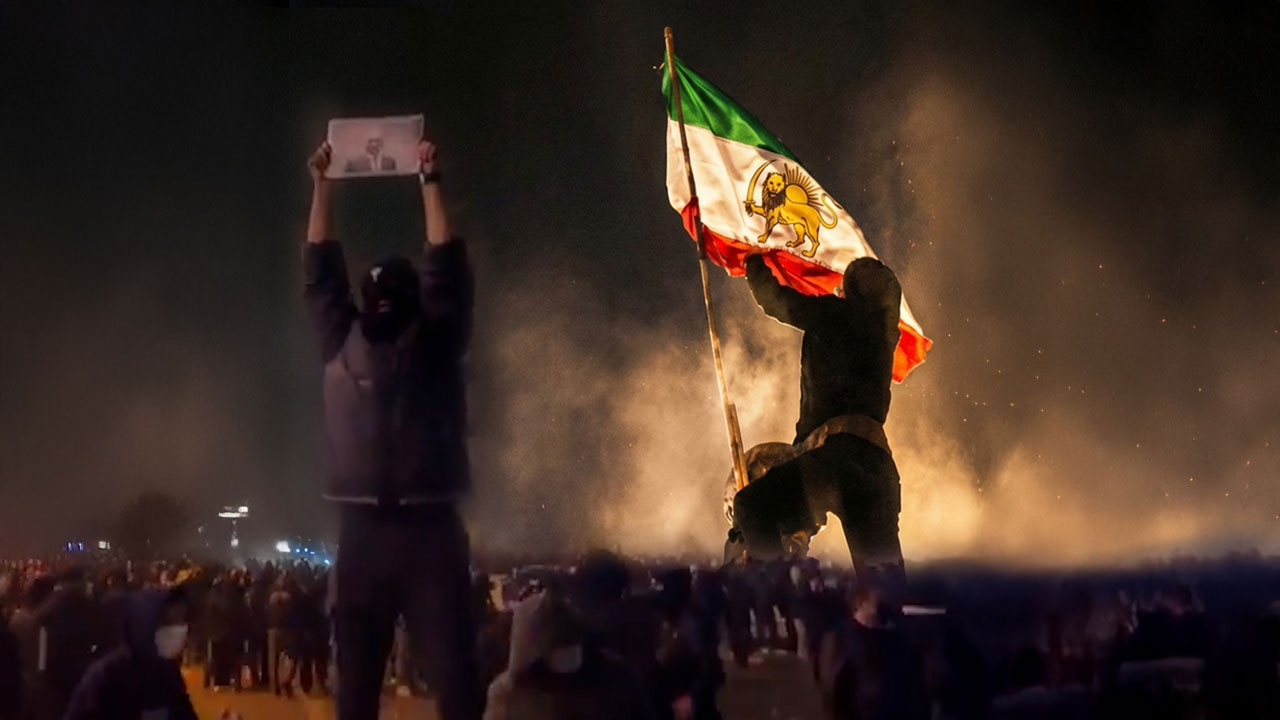
The role of knowledge, planning and operational preparedness before a change of government, and how they connect with the people and the leadership of the transition period.
 Poetry · S. Rouzbeh · 5 September 2026
Iran is the home we have inherited, whose walls still hold our mother's scent. Its doors may be locked and its lights put out, but no one can erase a home from the memory of those to whom it belongs.
 Stories · S. Rouzbeh · 5 September 2026
Amid shattered windows and the smoke of an explosion, a frightened girl asks her father why people wage war, and whether life could ever be free of it.
 Memoirs · S. Rouzbeh · 4 September 2026
Eighteen-year-old Yousef Miri tells his mother he will be home in twenty minutes. This account follows the waiting, the news his family received, and the everyday objects through which his mother remembers him.
 Articles · S. Rouzbeh · 3 September 2026
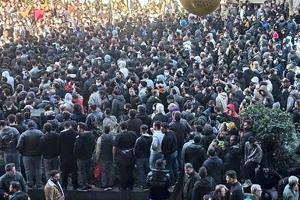
Why should the people of Iran weigh the cost to their lives and the likely outcome before returning to the streets? They have risen repeatedly; the question is not whether they want change, but what will be different this time—and why they alone should be expected to take the risks without calculating the consequences.
 Poetry · S. Rouzbeh · 3 September 2026
A meditation on the final ordinary day before a death, and on the families who continue living with the enduring presence of absence.
 Visual works · S. Rouzbeh · 3 September 2026
A depiction of increasing US economic pressure on the Islamic Revolutionary Guard Corps, focusing on restrictions on oil revenues and routes for evading sanctions.
 Articles · S. Rouzbeh · 3 September 2026
Pressure on oil, money and sanctions-evasion networks: who ultimately pays the bill?
 Articles · S. Rouzbeh · 31 August 2026
Taking an approximate figure of 40,000 deaths as a working assumption, this article considers the human future lost—not only the lives cut short, but also the families, relationships, experience and hopes that are wounded or disappear with them.
 Memoirs · S. Rouzbeh · 31 August 2026
S. Rouzbeh reconstructs Aref Barati's last day, his final public words, and the mourning that kept his name alive, while acknowledging what cannot be known about his final moments.
 Articles · S. Rouzbeh · 29 August 2026
S. Rouzbeh examines why Hossein Taeb has called on merchants and trade associations to monitor the market, and whether the government is seeking to turn their networks into an early-warning system amid fears that economic protests could become political.
 Stories · S. Rouzbeh · 29 August 2026
A mother searches for her eighteen-year-old son for twenty days. Drawing on her published words, photographs and memories, S. Rouzbeh recounts Amir Mohammad Hatami's life and the grief left with his mother and sister, with literary reconstruction where details are unavailable.
 Articles · S. Rouzbeh · 28 August 2026
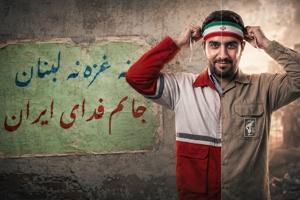
How the Islamic Republic shifted from rejecting national symbols to invoking Iran, the homeland and Iranian historical memory in its official propaganda during times of crisis.
 Visual works · S. Rouzbeh · 27 August 2026
The fire of Chaharshanbe Suri: a bond between generations and the continuity of Iranian culture and identity.
 Stories · S. Rouzbeh · 27 August 2026
After their son's death, a mother and father carry on with the smallest rituals of daily life, each one revealing an absence that time cannot heal.